You can help chimpanzees and other wild animals
Protect their habitat and improve their living conditions
Protect their habitat and improve their living conditions
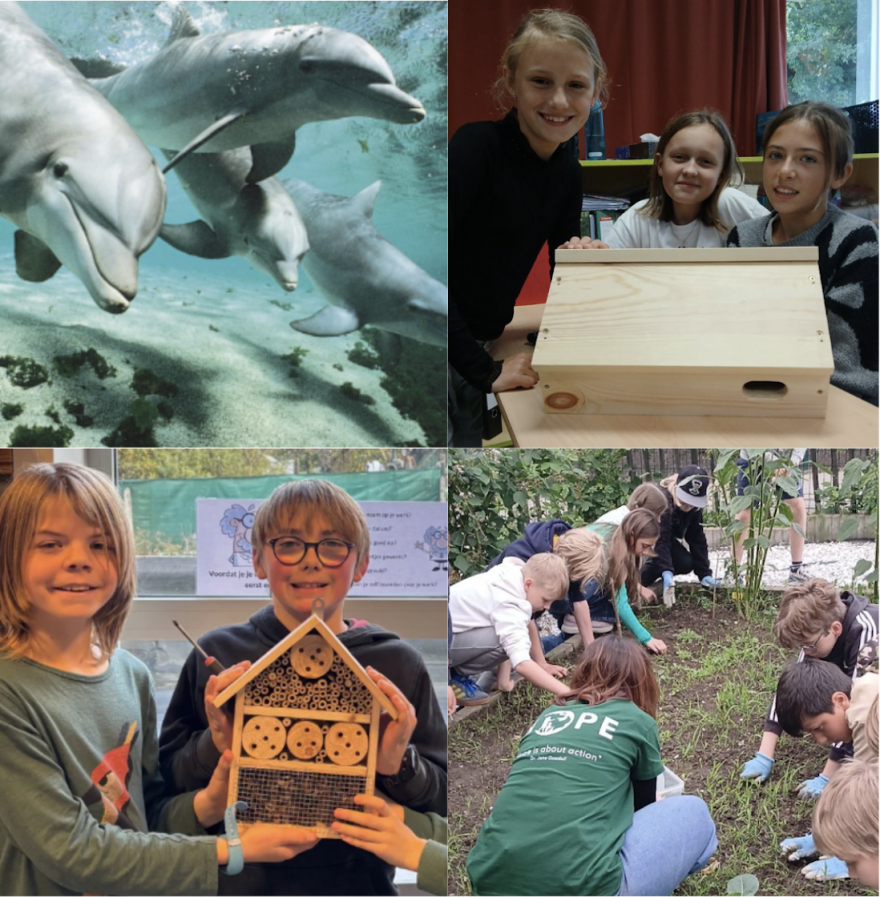
The Jane Goodall Institute Belgium not only contributes towards protecting chimpanzees in Africa - the emblematic species of our founder’s life work. Here in Belgium, our actions are also focused on protecting, and creating awareness of endangered local species including swifts, pollinating insects, and dolphins in dolphinariums, and others. Protecting species in Belgium allows us to involve the participation of local young people and empower them to make a positive impact in the world, by creating change locally, which is one of the main pillars of action of the Jane Goodall Institute as well.
For example, we have created a board game in collaboration with the non-profit organization “Swifts Without Borders” to raise awareness among young people about the importance of protecting these migratory birds that are threatened by climate change and urbanisation, an urgent problem in Belgium. As one of our actions, we build nesting boxes together with pupils and students to install on their school building so that they can observe the swifts nesting inside. This safe shelter allows these emblematic birds to reproduce and rest in complete safety.
With regard to pollinating species in Belgium, we have also created workshops on the importance of biodiversity and the role of pollination in our food system in particular. Children learn more about the insects in our country and the flowers they need, through a card game. They learn to build insect hotels to install in their schools in order to observe local biodiversity and, like for the swifts, support their protection by offering a “bed & breakfast” refuge in the city. Therefore, wildflowers are planted to create hotspots for pollinators in schoolyards. The Obsidentify app also allows young people to recognize which insects have settled in their hotels.
With our support of advocacy campaigns at various levels (national, European, international) we raise awareness about the impact of illegal hunting and trade of wild animals, and about animal welfare. The objective is to end keeping certain species in captivity. In cooperation with the animal rights organisation GAIA we took action and are still campaigning for the closure of the Bruges dolphinarium so that cetaceans in Belgium can be released into marine sanctuaries and enjoy a better life in semi-freedom.
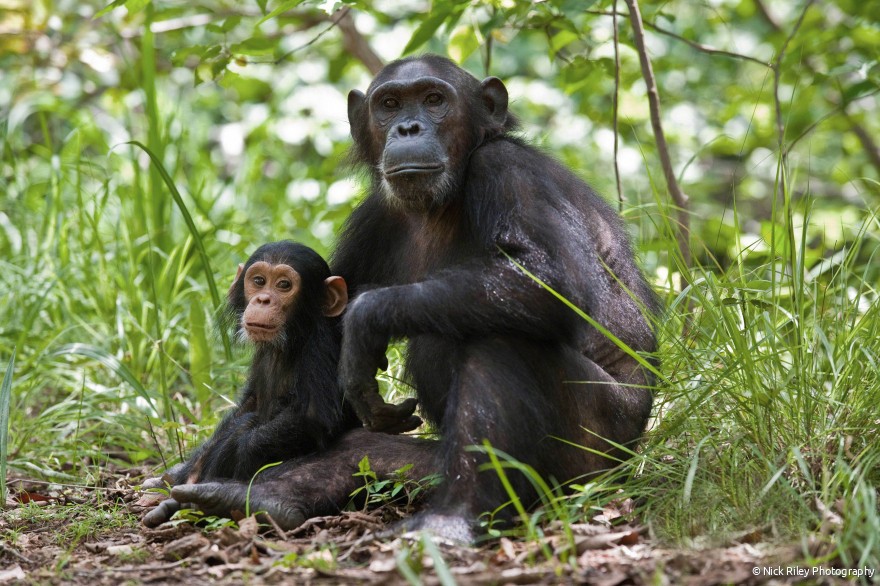
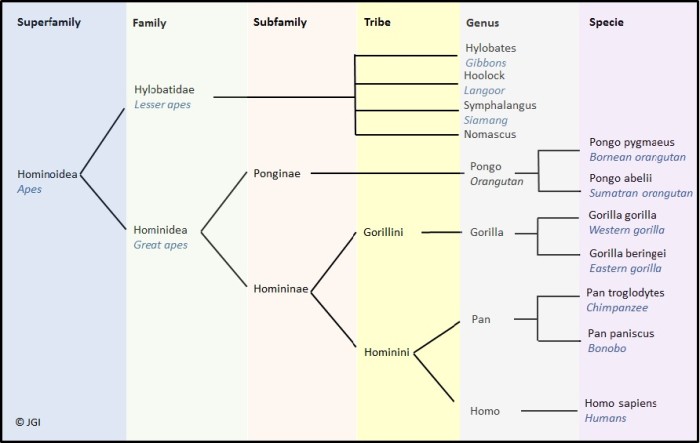
Chimpanzees are central to our work. They are among the five species of great apes, alongside gorillas, orang-utans, bonobos and humans. Since we share 98% of our DNA with chimpanzees, they are our our closest relatives.
The number of chimpanzees worldwide has declined dramatically. Whereas there were 1 million chimpanzees a century ago, only 340,000 remain in the wild today, and they are threatened with extinction. This is largely due to habitat loss through deforestation, the killing and abduction of chimpanzees for illegal trade, conflicts between humans and chimpanzees, and zoonotic diseases.
At JGI, we are engaged in building scientific knowledge about chimpanzees, influencing decision-making to benefit chimpanzees, working to raise awareness around their plight, and working with communities to protect chimpanzees and their habitats. We catch orphaned chimpanzees and advocate for a better future for all chimpanzees, both in the wild and in captivity.
Symbolic adoption of a chimp through JGI Belgium (you then become a ‘Chimp Guardian’) is a direct and impactful way to contribute to the protection of chimpanzees, an endangered species, and their habitat. You can contribute in two ways, by supporting rescued chimpanzees or protecting wild chimpanzees, see below. Many chimpanzees fall victim to poaching and illegal trade. In the process, infant and baby chimps are being abandoned. These helpless, traumatized orphans are left to fend for themselves. They face death or abuse (if they end up in illegal trade or else), unless they are rescued. Thanks to adoptions, these chimps get the care and protection they need to recover and grow up in a safe environment. With a symbolic adoption, you not only give a chimp better chances, but also contribute to a broader mission to protect nature and provide future generations with a healthier planet.
More specifically, JGI Belgium is associated with two sanctuaries in Africa (Chimp Eden in South Africa and Dindéfélo in Senegal) where chimpanzees are protected, given a dignified life and researched. Both sites owe their existence and operation to donations from sponsors. Through a symbolic adoption, you thus become Chimp Guardian of specific individuals being monitored at these centres. Although the adoption is purely symbolic and for the benefit of all chimps in the centres, your involvement has an immediate impact on the well-being of all residents, their caretakers and wider network, fully in line with Jane's message: causing ripples of hope to spread in all directions. Your recurring donation as a Chimp Guardian ensures the quality of life and survival of these chimpanzees, but also supports these centres in their day-to-day operations, and you contribute to the survival, research, awareness and involvement of the local communities around these refuges.
For just €130 a year, you can offer chimpanzees protection in their natural habitat or help care for rescued chimpanzees.
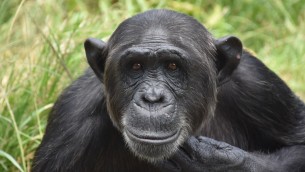
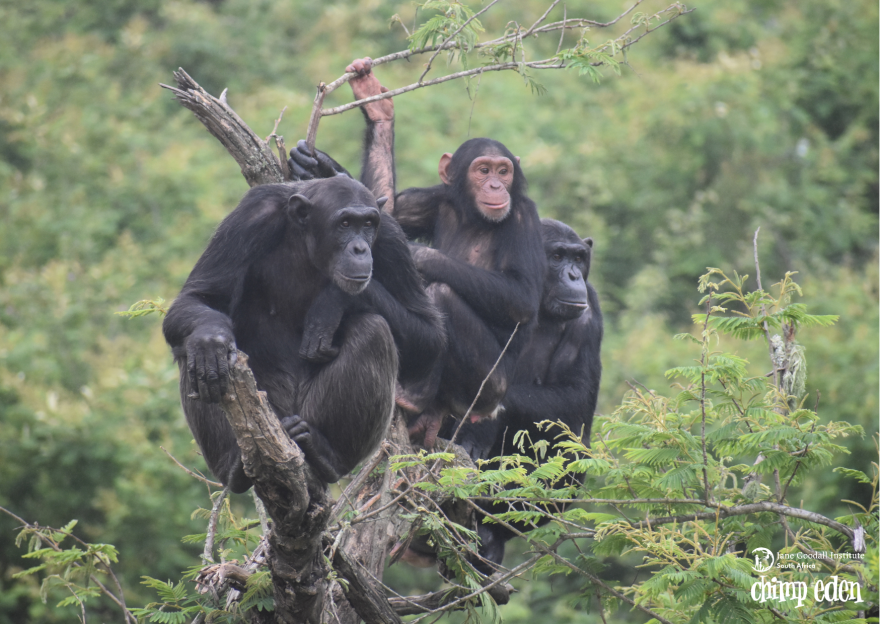
These chimpanzees reside at the Chimp Eden sanctuary in South Africa but are unable to return to their natural habitat because they have been traumatised. Help us give them a good life.
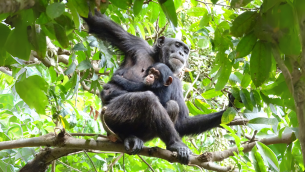
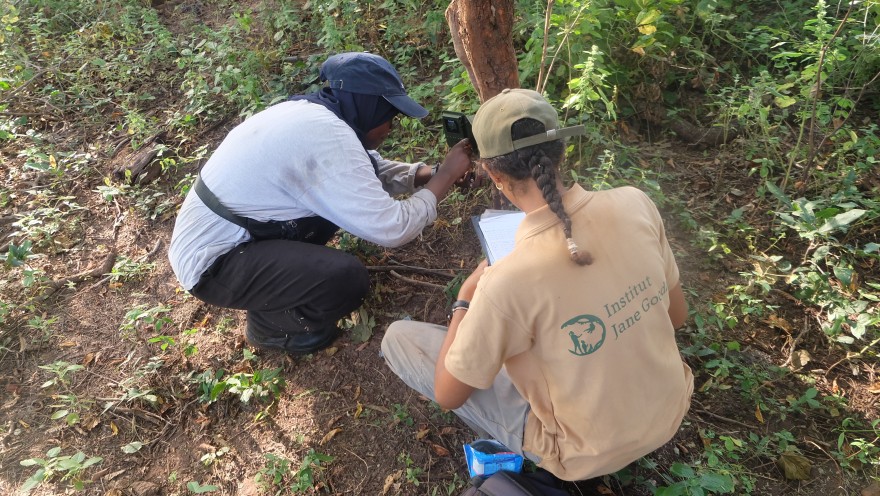
These chimpanzees live in the Dindéfelo Community Nature Reserve in Senegal. At the nature reserve, they are protected and cared for. The chimpanzees are also part of ongoing research that builds on Dr. Goodall's work and helps provide data to protect habitats and educate people.
Jane Goodall Institute’s program for the research and conservation of chimpanzees and sustainable management of natural resources takes place in Kédougou, Senegal and across the border in Guinea. The centre of the activities is Dindéfélo Community Nature reserve and its adjacent areas.
Kédougou is one of the few regions with chimpanzees in Senegal. They have become critically endangered. Many chimpanzee populations have become isolated in patches of forest which threatens their survival. Their biggest threats are human inflicted deforestation along with construction of infrastructure, such as dams, powerlines, and roads. The Dindéfélo Community was created to protect these critically endangered primates and are strong advocates in the community to raise awareness.
Chimp Eden Sanctuary is a chimpanzee rehabilitation centre in South Africa. Located in Umhloti Nature Reserve, it is home to more than 30 rescued chimpanzees, all victims of illegal trade or poaching.
Chimp Eden was established in 2006 and is still the only chimpanzee sanctuary in South Africa. The goal is to rescue chimpanzees that have survived the bushmeat trade, been orphaned, traded in the illegal pet market, or rescued from being abused for entertainment in circuses, beach resorts and nightclubs.
The chimpanzees at Chimp Eden are the lucky ones, living out their lives in a risk free environment and being provided with the necessary attention to recover from the trauma they have experienced.
 |
Your donation will be used to restore nature in Belgium and Africa, and to provide help and protection to chimpanzees. We believe it is important to be transparent about the impact of your donation. You can read a full overview of how your donation is used in our annual report. |
How we use your donation?
|